
C.S. Lewis’s The Chronicles of Narnia is populated by an extraordinary menagerie of creatures, ranging from gentle talking animals to terrifying mythological monsters. Drawing heavily from Greek, Roman, Norse, and Christian mythology, Lewis fused traditional folklore with original invention to create a living, breathing fantasy world where every creature carries deep symbolic weight.
Here is a look at the most significant creatures in the Narnia mythology, examining their lore, their roles in the books, and their impact on the overarching universe.
1. Aslan (The Great Lion)
- Mythological Roots: Christian theology, ancient Near Eastern lion symbolism, and traditional European heraldry.
- Role & Significance: Aslan is the true creator and king of Narnia, serving as the physical manifestation of supreme goodness, wisdom, and sacrificial love. Unlike other talking animals, he is a divine force present in every book—sometimes appearing as a majestic lion, sometimes as a whisper or a lamb.
- Book Highlights: In The Lion, the Witch and the Wardrobe, he willingly lays down his life on the Stone Table to save Edmund, enacting a deep magic from before the dawn of time to achieve resurrection. In The Magician’s Nephew, he sings the entire world of Narnia into existence out of the void.
2. The White Witch / Jadis
- Mythological Roots: Ice giants, ancient sorceresses, and Miltonian archetypes of fallen angels.
- Role & Significance: Originally hailing from the dying, apocalyptic world of Charn—where she annihilated all life using the catastrophic “Deplorable Word”—Jadis crossed over into the newly born Narnia and plunged it into a hundred years of perpetual winter where it is “always winter and never Christmas.”
- Book Highlights: As the primary antagonist of The Magician’s Nephew and The Lion, the Witch and the Wardrobe, she represents absolute tyranny, cold intellect, and the corruption of power, wielding a wand that turns her enemies into stone.
3. Reepicheep (The Noble Mouse)
- Mythological Roots: Classical talking animal fables and chivalric knightly romance archetypes.
- Role & Significance: A valiant, fiercely proud talking mouse who serves as a captain of Narnian troops. Despite his tiny stature, Reepicheep possesses the largest heart and the highest sense of honor in all of Narnia, driven by a deep spiritual longing to reach Aslan’s own country across the Eastern Sea.
- Book Highlights: Introduced in Prince Caspian and playing a pivotal role in The Voyage of the Dawn Treader, Reepicheep ultimately paddles his tiny coracle off the edge of the world into Aslan’s celestial realm, embodying ultimate spiritual devotion.
4. The Talking Animals (Beavers, Badgers, and Centaurs)
- Mythological Roots: Aesop’s fables, Celtic nature spirits, and classical beast epics.
- Role & Significance: The native inhabitants of Narnia granted the gift of speech by Aslan at the world’s creation. Creatures like Mr. and Mrs. Beaver, Trufflehunter the Badger, and Glenstorm the Centaur anchor the moral compass of Narnia, preserving its ancient laws, prophecies, and loyalty to the true king against foreign invaders and evil rulers.
5. Fauns, Satyrs, and Dryads (Narnia’s Nature Spirits)
- Mythological Roots: Greek and Roman mythology (Pan, satyrs, dryads, and hamadryads).
- Role & Significance: These woodland spirits embody the wild, untamed, and celebratory heartbeat of Narnia’s forests. Mr. Tumnus, the faun who first greets Lucy Pevensie when she steps through the wardrobe, represents the deep emotional awakening of Narnia under the shadow of the Witch’s tyranny.
6. Werewolves, Minotaurs, and Ghouls
- Mythological Roots: European monster folklore, Greek mythology, and classical horror archetypes.
- Role & Significance: Serving primarily as the brutal foot soldiers and executioners of the White Witch and later the Telmarine tyrants, these dark creatures represent the chaotic, bloodthirsty elements of the Narnian underworld. They stand in stark contrast to the noble, civilised talking beasts, reminding readers that Narnia is a battleground between light and darkness.
Upcoming Narnia Media & Resources
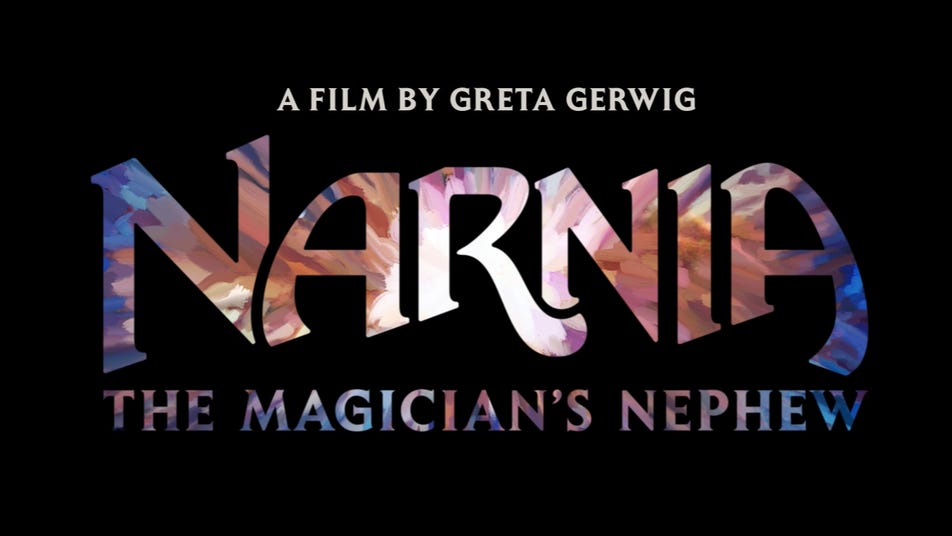
As Netflix’s cinematic universe approaches under the direction of Greta Gerwig—beginning with The Magician’s Nephew in theaters on February 12, 2027—fans have a wealth of classic adaptations and literature to explore:
- Classic Adaptations: The definitive 1980s BBC Television Series (The Lion, the Witch and the Wardrobe, Prince Caspian & The Voyage of the Dawn Treader, The Silver Chair), and the modern Walden Media / Disney film trilogy (The Chronicles of Narnia: The Lion, the Witch and the Wardrobe [2005], Prince Caspian [2008], and The Voyage of the Dawn Treader [2010]).
- Original Literature: C.S. Lewis’s complete seven-book heptalogy, spanning from the creation of the universe in The Magician’s Nephew to the eschatological finale in The Last Battle.
Discover EVERYTHING NARNIA – books, movies and more, via AMAZON.


