
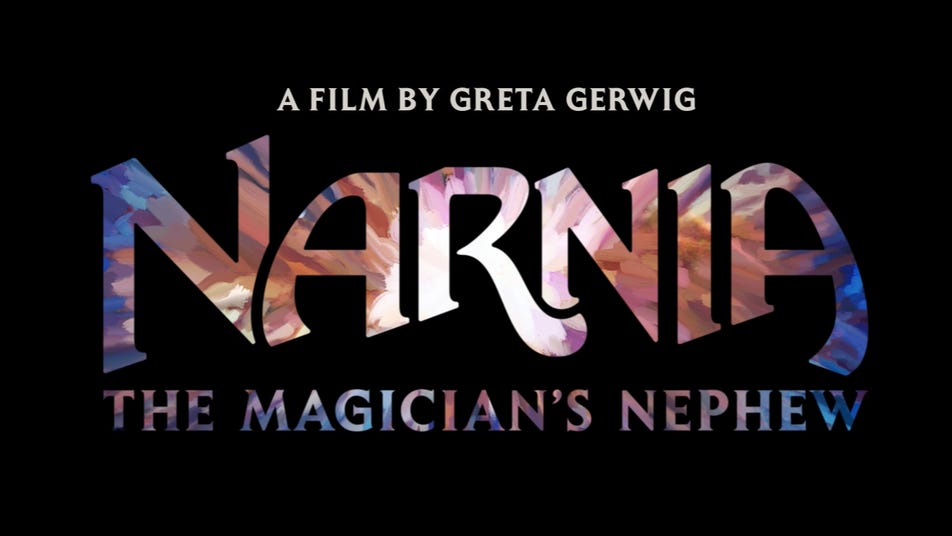
When C.S. Lewis crafted The Chronicles of Narnia in the 1950s, he did not just build a fantasy realm behind a fur coat; he constructed a sophisticated cosmological architecture that predates modern multiversal sci-fi tropes while drawing deeply from ancient mythology.
With Netflix and Greta Gerwig bringing The Magician’s Nephew to the forefront, the franchise’s unique approach to alternate dimensions, time dilation, and cosmic mythmaking is stepping back into the spotlight. How does Narnia’s multiverse work, and what scientific and mythological foundations set it apart from other speculative fiction?
1. The Multiverse and the Wood Between the Worlds
Long before comic book movies popularized infinite branching realities, Narnia introduced one of the most conceptually eerie multiverses in literature: The Wood Between the Worlds.
Introduced in The Magician’s Nephew, this space is a quiet, stagnant, dreamlike forest filled with countless shallow pools of water. Each pool is not merely a portal, but a gateway to an entirely separate universe or timeline (such as dying Charn or newborn Narnia).
- The Science-Fiction Comparison: Unlike modern sci-fi multiverses driven by quantum mechanics, string theory, or branching timelines (like Everything Everywhere All at Once or the MCU), Narnia’s multiverse operates on a metaphysical, alchemical plane. The Wood functions as a connective tissue—a waiting room between realities where time slows down to a heavy, soporific crawl, and visitors eventually lose their memories if they stay too long.
2. How Time Works Across Realities
One of Narnia’s most fascinating narrative engines is its elastic, non-linear relationship with time.
- Asynchronicity: Time in Narnia does not run parallel to Earth time. Decades or even centuries can pass in Narnia while mere seconds or minutes tick away in Victorian London. When the Pevensie children rule Narnia for years and grow into adults in The Lion, the Witch and the Wardrobe, they tumble back out of the wardrobe as children, having lost no chronological age on Earth.
- Mythological Roots: This mimics ancient mythologies regarding mortal passage into the Faerie Realm or the Celtic Otherworld (Tír na nÓg), where mortals spend what feels like an afternoon feasting with immortals, only to return to Earth and find that centuries have elapsed and their mortal lives have turned to dust.
3. Mythological Genesis: Creation Through Sound
The creation of Narnia in The Magician’s Nephew diverges sharply from standard fantasy world-building, drawing directly from ancient Near Eastern and biblical creation myths.
Aslan does not mold Narnia with physical hands or magical artifacts; he sings it into existence. As his magnificent, rolling voice echoes across the dark, empty void, stars ignite, the earth swells, and plants burst forth in real-time response to his musical cadence.
- This directly mirrors ancient creation lore, such as the Babylonian Enûma Eliš or the concept of the Logos (the divine word/sound of creation), as well as J.R.R. Tolkien’s Ainulindalë (the Music of the Ainur in the creation of Arda), reflecting Lewis and Tolkien’s shared belief that true creation is harmonious and divine.
Upcoming Narnia Media & Resources
As Netflix’s cinematic universe prepares to launch under Greta Gerwig with The Magician’s Nephew—hitting IMAX sneak previews on February 10, 2027, a global theatrical release on February 12, 2027, and streaming on Netflix on April 2, 2027—fans have a rich legacy of adaptations and texts to explore:
Original Literature: C.S. Lewis’s complete seven-book heptalogy, tracing the multiverse from the cosmic void of The Magician’s Nephew to the eschatological paradise of The Last Battle.
Classic Adaptations: The definitive 1980s BBC Television Series and the modern Walden Media film trilogy (The Lion, the Witch and the Wardrobe [2005], Prince Caspian [2008], and The Voyage of the Dawn Treader [2010]).
Discover EVERYTHING NARNIA – books, movies and more, via AMAZON.


