
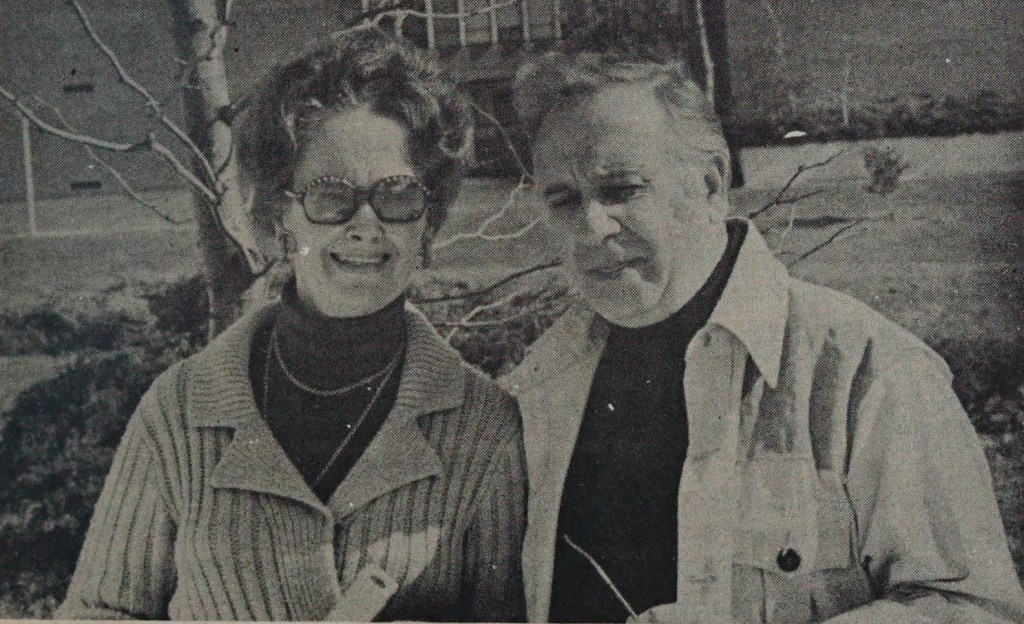
In the realm of paranormal entertainment, few names command as much immediate recognition as Ed and Lorraine Warren. Long before Hollywood transformed them into the central figures of a cinematic universe, the self-taught demonologist and his clairvoyant wife built an empire out of their modest home in Monroe, Connecticut. They claimed to have investigated more than 10,000 cases, bringing a strict framework of traditional Catholic theology to the unexplainable.
Yet, decades after their most famous investigations, the true nature of their work remains a source of endless debate. Were they pioneering heroes standing as a barrier against dark entities, or were they simply masterful storytellers who knew how to market a haunting? The cracks in the armor are visible, but the ultimate answers depend entirely on what you are willing to believe.
The Vatican and the Warrens: An Official Disconnect
To understand the complex nature of the Warrens’ legacy, one must look at how the Roman Catholic Church formally views them. In interviews and lectures, Ed Warren frequently stated that he was the only non-ordained layman recognized by the Catholic Church as a “demonologist”.
However, official Church documentation tells a much quieter story. According to canon law and the formal Catechism of the Catholic Church, the Solemn Rite of Exorcism can legally and licitly be performed only by an ordained priest who has received explicit, case-by-case authorization from their local bishop.
The Church has never officially verified Ed’s claims of an exclusive, layman’s title, nor has it ever formally endorsed the New England Society for Psychic Research (NESPR). While the Warrens frequently worked alongside individual, rogue priests who were willing to bless troubled homes or look at evidence, the upper echelons of the Vatican have maintained a careful, strategic distance.
Critics argue this silence speaks volumes, suggesting the Church viewed the Warrens as a loose-cannon media spectacle that cheapened sacred rites into a “fast-and-loose” Hollywood sideshow. Believers, however, counter that the Church routinely relies on independent “triage” investigators to vet cases quietly before sending in a formal, heavily bureaucratic clerical investigation.
1. The Amityville Horror (1976)
No case is more legendary—or more deeply contested—than the haunting of 112 Ocean Avenue in Amityville, Long Island. Following the horrific real-life tragedy where Ronald DeFeo Jr. murdered his family, the subsequent owners, George and Kathy Lutz, fled the house after just 28 days, claiming a violent demonic force had driven them out.
The Warrens arrived weeks later with a television crew in tow. Lorraine reported overwhelming, heavy psychic impressions of the murders, while an automatic camera captured the infamous “ghost boy” photograph on the second-floor landing—an image that remains one of the most fiercely debated pieces of paranormal evidence in existence.
The Cracks in the Case:
The foundation of the Amityville narrative famously fractured when William Weber, DeFeo’s defense attorney, publicly claimed that he and the Lutz family had largely invented the most terrifying supernatural details over bottles of wine to generate a highly marketable book concept. Skeptics also pointed out that the “ghost boy” bore an uncanny resemblance to Paul Bartz, one of the investigators working alongside the Warrens that night.
Did the Warrens step into a genuine hotspot of lingering trauma and dark energy, or were they caught up in a brilliant, calculated real estate hoax? The truth remains buried beneath decades of media speculation.
2. The Trial of Arne Cheyenne Johnson (1981)
In 1981, 19-year-old Arne Cheyenne Johnson stabbed his landlord, Alan Bono, to death in Brookfield, Connecticut. The Warrens, who had previously been called to assist with the alleged demonic possession of the younger brother of Johnson’s fiancée, immediately made national headlines by claiming that Johnson was completely innocent. They stated that during an earlier, chaotic exorcism, Johnson had taunted the demon to leave the young boy and possess him instead.
The Cracks in the Case:
The grand legal defense completely fell apart in a court of law. The presiding judge flatly rejected the plea of “not guilty by reason of demonic possession,” ruling that it was entirely unprovable, unscientific, and legally inadmissible. Johnson was ultimately convicted of manslaughter.
Decades later, members of the family filed lawsuits against the Warrens, claiming the couple had actively exploited a child’s severe, undiagnosed psychological distress to secure a book deal (The Devil in Connecticut). Was it a case of true spiritual possession, or a tragic intersection of mental health struggles and a desperate legal defense?
3. The Snedeker Funeral Home Haunting (1986)
When the Snedeker family moved into a spacious home in Southington, Connecticut, to be closer to their son’s cancer treatments, they were horrified to discover the building had previously functioned as a fully operational mortuary. They claimed to experience terrible smells, shifting shadows, and physical assaults. The Warrens stepped in, declaring that necrophiliac morticians had historically conjured powerful demons into the property.
The Cracks in the Case:
The case resulted in the chilling 1993 book In a Dark Place: The Story of a True Haunting. However, the book’s highly respected co-writer, professional horror author Ray Garton, later blew the whistle on the entire narrative. Garton publicly stated that the Snedeker family was deeply fractured, and their individual accounts of the haunting were completely contradictory and inconsistent.
When Garton approached Ed Warren with his journalistic concerns that the facts weren’t lining up, Ed allegedly told him to simply write whatever worked, make it up, and make it scary, stating that the people who came to them were often unstable. Whether the house held a lingering, dark spiritual residue or the family’s shared stress manifested a psychological nightmare remains an open question.
The Literature, the Museum, and the Legacy
Beyond their physical investigations, the Warrens built a profound media footprint through books like Ghost Hunters and a continuous string of appearances on late-night television and daytime talk shows. They spoke with absolute, unwavering theological authority, presenting photographic evidence of “orbs” and “ectoplasm” to audiences that had no way of fact-checking the technical limitations of film photography at the time.
Then, of course, there is their world-famous Occult Museum in Monroe, Connecticut. For decades, visitors could view a basement filled with objects the Warrens claimed were touched by absolute evil—most notably the Annabelle doll. While the films depict a terrifying, cracked porcelain entity, the real artifact is an ordinary, mass-produced Raggedy Ann doll. Skeptics have long noted that the collection relies heavily on common photographic anomalies and unprovable folklore, yet believers still view the basement as a vault of genuine supernatural containment.
The Unresolved Conclusion
Ed Warren passed away in 2006, and Lorraine followed in 2019, leaving behind a legacy that refuses to be neatly categorized.
If you view them through a strictly scientific lens, they were masterful entrepreneurs who discovered a brilliant niche: taking real-world human tragedy, layering it with traditional religious panic, and turning it into timeless horror lore.
But if you leave the door open to the unexplained, they were pioneers who provided comfort and answers to terrified families when mainstream science and official Church channels turned their backs. Whether they were fighting real demons or simply the shadows of human imagination, the Warrens successfully created a modern American mythos that continues to haunt us to this day.


