For decades, Hollywood considered J.R.R. Tolkien’s sprawling legendarium “unfilmable.” Yet from humble, low-budget Swedish television broadcasts and rotoscoped 1970s animation to Peter Jackson’s Academy Award-sweeping blockbusters and Amazon’s billion-dollar streaming epic—currently midway through The Rings of Power Season 3—Middle-earth has proved to be one of the most resilient worlds ever brought to the screen.
Formatted for easy publishing, here is the definitive breakdown of every major theatrical, television, and animated adaptation of Tolkien’s universe, tracing its journey from experimental oddities to pop-culture juggernaut.
Part I: The Early Experiments & Animated Classics (1966–1980)
Long before modern CGI made Balrogs and Mumakil look photorealistic, pioneering animators and European broadcasters took wildly creative swings at translating Tolkien’s prose.
- The Hobbit (1967 Animated Short) — Directed by Gene Deitch: Produced on a shoestring budget by William L. Snyder simply to retain the film rights to the novel, this 12-minute cutout animation radically compresses Bilbo’s journey (replacing Smaug with a generic dragon named “Slag” and inserting a princess) and was screened only once in a New York projection room to fulfill contractual obligations.
- Sagan om Ringen (1971 Swedish TV Adaptation) — Directed by Bo Hansson: A fascinating, psychedelic piece of television history aired by Sveriges Television. Using early chroma-key (blue screen) effects to place live actors over hand-drawn illustrations, this two-part broadcast was directly inspired by musician Bo Hansson’s instrumental concept album Music Inspired by Lord of the Rings.
- The Hobbit (1977 Animated TV Special) — Directed by Arthur Rankin Jr. and Jules Bass: Produced by Rankin/Bass (famed for Rudolph the Red-Nosed Reindeer) with animation by Japanese studio Topcraft (whose artists later formed Studio Ghibli), this Peabody Award-winning NBC special remains beloved for its storybook watercolor backgrounds, eerie Gollum design, and folk-rock soundtrack featuring Glenn Yarbrough.
- The Lord of the Rings (1978 Animated Feature) — Directed by Ralph Bakshi: An ambitious, boundary-pushing theatrical film that adapted The Fellowship of the Ring and the first half of The Two Towers. Bakshi famously used rotoscoping—filming live actors in costume and tracing over the frames—to create a haunting, dreamlike aesthetic, though the studio declined to fund a second part to finish the story.
- The Return of the King (1980 Animated TV Special) — Directed by Arthur Rankin Jr. and Jules Bass: Serving as an unofficial spiritual sequel to both their 1977 Hobbit special and Bakshi’s unfinished 1978 film, Rankin/Bass returned with Topcraft to conclude the War of the Ring, featuring memorable musical numbers like “Where There’s a Whip, There’s a Way.”
Part II: Cold War Curiosities & European Television (1985–1993)
Behind the Iron Curtain and across Northern Europe, state television networks produced remarkably faithful—if visually eccentric—live-action adaptations.
- The Fabulous Journey of Mr. Bilbo Baggins, the Hobbit (1985 Soviet TV Play) — Directed by Vladimir Latyshev: Broadcast on Leningrad Television, this charming, stage-bound Russian adaptation features actors performing in front of painted theatrical backdrops, punctuated by narration from an actor portraying Professor Tolkien himself sitting in a study.
- Khraniteli (1991 Soviet TV Adaptation) — Directed by Natalya Serebryakova: Long thought lost until rediscovered and uploaded online in 2021, this two-part Leningrad Television broadcast of The Fellowship of the Ring is famous among Tolkien completionists for including characters cut from Peter Jackson’s films—most notably Tom Bombadil and the Barrow-wights.
- Hobitit (1993 Finnish TV Miniseries) — Directed by Timo Torikka: A nine-episode live-action series produced by Finnish broadcaster Yle. Framing the entire Lord of the Rings narrative as an aged Samwise Gamgee recounting the journey to young Hobbits, it utilized theatrical stagecraft and low-budget charm to cover Frodo’s quest.
Part III: The Peter Jackson Cinematic Era (2001–2014)
New Line Cinema and director Peter Jackson forever changed fantasy filmmaking, anchoring Middle-earth in tactile, Weta Workshop-crafted realism across six blockbuster features.
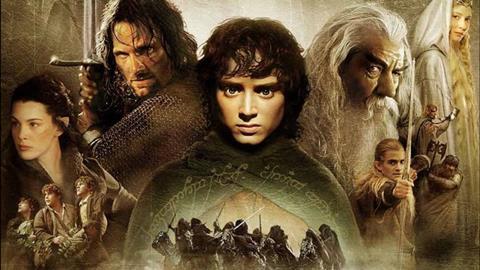
- The Lord of the Rings: The Fellowship of the Ring (2001): Introduced audiences worldwide to Jackson’s breathtaking New Zealand landscapes, Elijah Wood’s Frodo, Ian McKellen’s Gandalf, and Viggo Mortensen’s Aragorn, earning four Academy Awards and redefining modern epic cinema.
- The Lord of the Rings: The Two Towers (2002): Raised the technical bar permanently with Andy Serkis’s groundbreaking motion-capture performance as Gollum and the nocturnal, rain-soaked siege of Helm’s Deep.
- The Lord of the Rings: The Return of the King (2003): The crowning achievement of the trilogy, sweeping all 11 Academy Awards for which it was nominated—including Best Picture and Best Director—tying the all-time Oscar record.
- The Hobbit: An Unexpected Journey (2012): Jackson returned to Middle-earth to kick off a three-part prequel adaptation of Bilbo’s adventure, starring Martin Freeman as young Bilbo and Richard Armitage as Thorin Oakenshield.
- The Hobbit: The Desolation of Smaug (2013): Expanded Tolkien’s slim novel with material drawn from The Lord of the Rings Appendices—tracking Gandalf’s investigation of the Necromancer at Dol Guldur—and showcased Benedict Cumberbatch’s motion-captured voice performance as the dragon Smaug.
- The Hobbit: The Battle of the Five Armies (2014): Concluded the six-film New Line saga with an extended, large-scale clash beneath the Lonely Mountain, bridging the narrative directly into the opening of The Fellowship of the Ring.
Part IV: The Streaming & Modern Franchise Era (2022–Present)
With television budgets rivaling major motion pictures and New Line expanding its theatrical footprint, Middle-earth has entered a bold new era spanning both the Second and Third Ages.
- The Lord of the Rings: The Rings of Power (2022–Present, Amazon Prime Video) — Created by J.D. Payne and Patrick McKay: Set thousands of years before Bilbo and Frodo in the Second Age, this massive streaming epic draws primarily from the Appendices to chronicle the forging of the Rings of Power, the rise of Sauron (Charlie Vickers), the fall of the island kingdom of Númenor, and the Last Alliance of Elves and Men. Currently midway through its third season, the series continues to chart Sauron’s tightening grip over Middle-earth and the forging of the One Ring.
- The Lord of the Rings: The War of the Rohirrim (2024 Animated Feature) — Directed by Kenji Kamiyama: Returning to New Line Cinema’s cinematic continuity in striking anime style, this feature-length prequel takes place roughly two centuries before The Hobbit, following Helm Hammerhand, the legendary King of Rohan, and his fierce daughter Héra as they defend the fortress that would come to bear his name: Helm’s Deep.
- The Lord of the Rings: The Hunt for Gollum (Upcoming Theatrical Feature) — Directed by and Starring Andy Serkis: Spearheaded by producer Peter Jackson and writers Fran Walsh and Philippa Boyens, this live-action theatrical installment explores the tense, unseen chapter between Bilbo’s birthday party and the Mines of Moria, as Gandalf tasks Aragorn with tracking down Gollum before Sauron’s forces can extract the truth about the Shire.
Whether rendered in 1970s watercolor, Soviet stagecraft, or billion-dollar streaming spectacle, every adaptation reflects the enduring power of Tolkien’s sub-creation—proving that the road to Middle-earth goes ever on and on.