
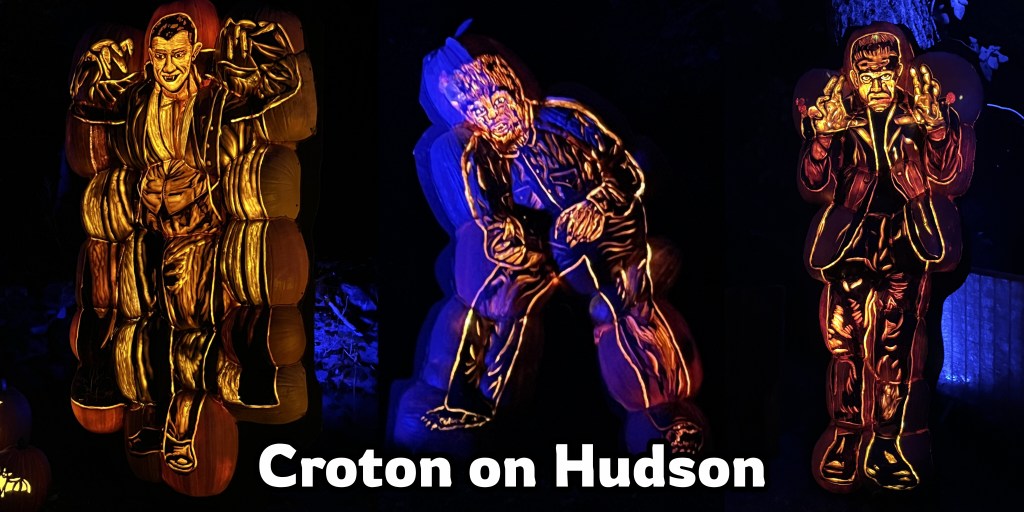
When talking about the royalty of classic horror, film history naturally points to the undisputed “Big Three” of the golden age of monster cinema: Dracula, Frankenstein’s Monster, and The Wolf Man (often fondly nicknamed “Wolfgang” in classic monster fandom lore).
While these icons were immortalized by Universal Pictures in the 1930s and 40s, their roots stretch deep into European folklore, historical atrocities, and medical anomalies. Let’s pull back the cinematic velvet curtain to explore the real-life characters and legends that birthed horror’s holy trinity.
1. Dracula: The Impaler Prince and the Blood Curses of Wallachia
The cinematic image of Count Dracula—slicked-back hair, evening cape, and aristocratic European menace, brilliantly shaped by Bela Lugosi—rests on a foundation of brutal, historical bloodshed.
- The Real-Life Legend: Bram Stoker drew his titular vampire’s name and ruthless reputation from Vlad III, Prince of Wallachia (commonly known as Vlad the Impaler or Vlad Dracula, meaning “Son of the Dragon”), who ruled parts of 15th-century Romania.
- The Reality Behind the Myth: While the historical Vlad was not an undead creature of the night who slept in dirt boxes, his preferred method of psychological and physical warfare was brutally theatrical. He earned his moniker by impaling tens of thousands of his enemies and political rivals on massive wooden stakes, famously leaving fields of rotting corpses to terrify invading Ottoman armies. Stoker borrowed the historical prince’s name and fierce reputation, blending it with local Balkan folklore regarding strigoi—troublesome, restless spirits of the dead that rose from the grave to drain the life from the living.
2. Frankenstein: Grave Robbers, Galvanism, and the Birth of Sci-Fi
Mary Shelley’s Frankenstein; or, The Modern Prometheus (1818) gave birth to both science fiction and a monster that would become a universal symbol of misunderstood tragedy. But the “doctor” and his creature were stitched together from very real 18th-century scientific breakthroughs and dark medical practices.
- The Real-Life Experiments: During the late 18th and early 19th centuries, European science was obsessed with galvanism—the theory that electrical currents could stimulate muscle movement and potentially reanimate dead tissue. Italian physicist Giovanni Aldini publicly wired up the corpses of executed criminals (such as murderer George Foster in London), causing jaws to twitch, eyes to open, and limbs to thrash violently in front of horrified, packed audiences.
- The Inspiration: Shelley was also deeply influenced by local German legends surrounding Castle Frankenstein, situated near Darmstadt, where an alchemist named Johann Konrad Dippel had allegedly experimented with animal bones, blood, and nitroglycerin in an effort to unlock the secrets of life and death. Combine these chilling scientific spectacles with the era’s rampant body-snatching trade—where criminals dug up fresh graves to sell corpses to medical anatomists—and Frankenstein’s laboratory starts to look startlingly grounded in history.
3. The Wolf Man (“Wolfgang”): Lycanthropy, Medical Curiosities, and the Full Moon
Rounding out the Big Three is the tragic lycanthrope, popularized by Lon Chaney Jr. in Universal’s 1941 classic. Unlike vampires and artificial men, the legend of the werewolf taps directly into deep-seated psychological fears of human primal savagery.
- The Real-Life Legend: The belief in men transforming into beasts dates back to antiquity, referenced in ancient Greek mythology (such as the legend of King Lycaon of Arcadia) and formalized during the terrifying European witch trials of the 15th to 17th centuries. In an era desperately trying to rationalize mental illness, thousands of individuals were accused, tried, and executed for being literal shape-shifting wolves.
- The Medical Reality: Behind the myth lies a haunting medical condition known today as hypertrichosis (or “Ambras syndrome”), a rare genetic disorder causing abnormal, excessive hair growth all over the face and body. In medieval and Renaissance Europe, unfortunates born with this condition were frequently cast out, misunderstood, and labeled as cursed beasts or wild men, cementing the tragic archetype of the monster who cannot control his own flesh.
From History to Silver Screen Immortality
What makes Dracula, Frankenstein’s Monster, and the Wolf Man enduring cultural touchstones is how seamlessly they bridge the gap between historical terror and cinematic art. They transitioned from the dark pages of folklore, real-world execution fields, and mad-science laboratories into the absolute bedrock of pop culture—proving that our favorite monsters are often the ones that reflect our own humanity back at us.
For a great look at classic horror icons clashing on screen, check out this Universal Monsters overview video, which highlights how these legendary characters were brought together in cinematic history.


