
From the misty, sprawling forests of the Pine Barrens to the turbulent shores of the Delaware Bay, southern New Jersey is a land steeped in legend and lore. Its long history of colonial conflict, maritime tragedy, and mysterious cryptid sightings has left a rich tapestry of paranormal phenomena waiting to be explored. Forget the amusement parks for a moment—it’s time to trade your beach towel for a flashlight and embark on a self-guided tour of some of the most famously haunted locations in the region.
Grab your gear and get ready. We’re going ghost hunting.
Part 1: The Cryptid Core – The Pine Barrens
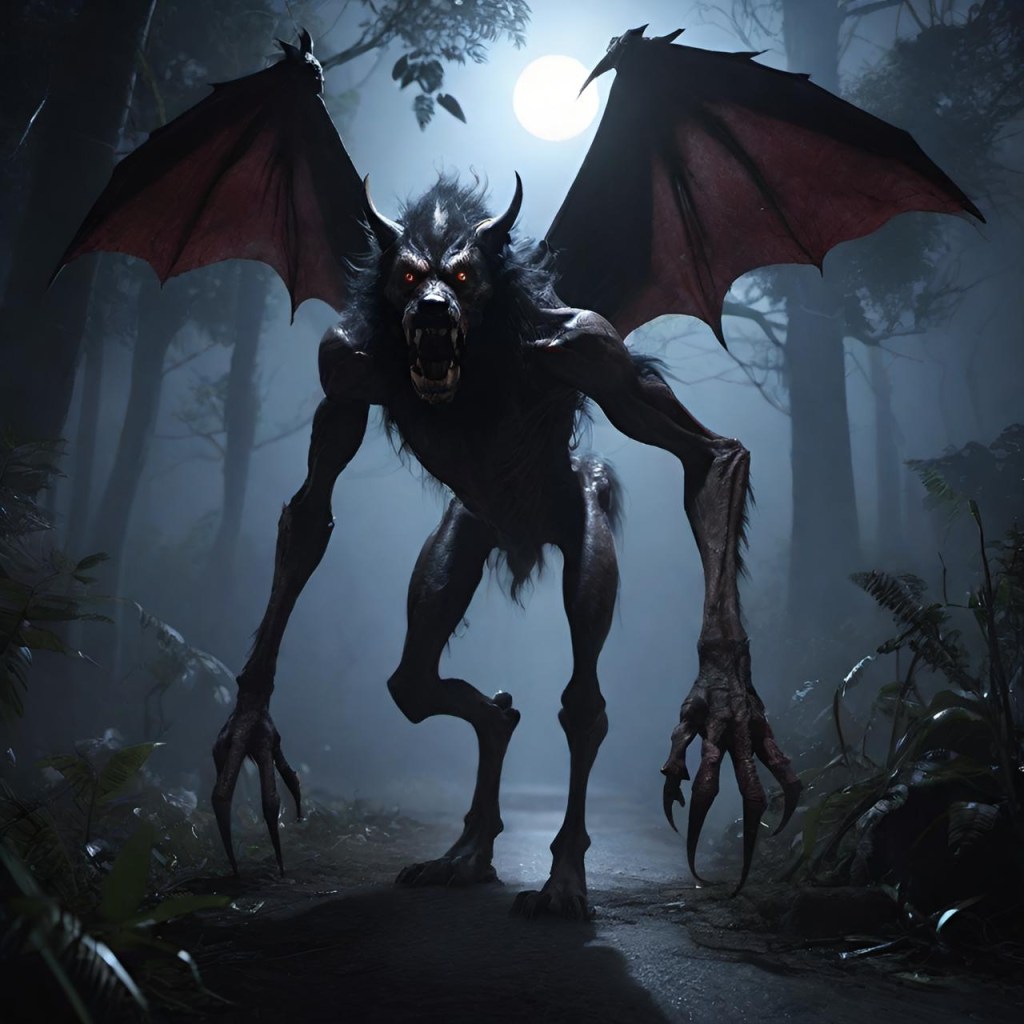
The vast expanse of the Pine Barrens is the undisputed heart of New Jersey’s paranormal landscape, primarily due to its most famous resident, the Jersey Devil, also known as the Leeds Devil.1 This folkloric creature has been a source of terror for nearly 300 years.1 While you won’t find a specific address for the Devil’s lair, the legends are rooted in real places and historical figures.
- The Pine Barrens: A 1.1 million-acre wilderness.1 The most common legend of the Jersey Devil’s birth places its origin with a woman named Mother Leeds in 1735, who cursed her 13th child, causing it to be born as a monstrous creature with a horse’s face, bat wings, and hooves.1 The legend has a fascinating historical underpinning, as some historians believe it was political propaganda to defame the prominent Leeds family.3 The area is also home to the benevolent spirit of James Still, the “Black Doctor,” an African American herbalist whose spirit is said to still roam the woods, helping lost or injured travelers.4
- Ong’s Hat Ghost Town: This ghost town is a legendary site that some believe to be a portal to another dimension, named after a man’s hat that, according to local folklore, was thrown in the air and never came back down.4
Part 2: The Haunted Coastline – Atlantic City and Wildwood
Southern New Jersey’s coastal towns hold their own share of spirits, often tied to the treacherous waters that claimed countless lives.
- Absecon Lighthouse: 31 S Rhode Island Ave, Atlantic City, NJ.7 As the tallest lighthouse in New Jersey, the Absecon Lighthouse is a beacon for the living and the dead.9 The area was once known as a “Graveyard Inlet”.7 Visitors and workers have reported a wide array of paranormal activity, including phantom footsteps on the stairs, disembodied voices, and the smell of cigar smoke.7 It’s also the site of one of the oldest supernatural sightings in the region, with a lighthouse keeper claiming to have seen the Jersey Devil perched atop the tower in 1905.7
- Ghost Ship: 3501 Boardwalk, Wildwood, NJ.10 A walk-through haunted house located on Morey’s Piers, this popular attraction offers a spooky experience. Wildwood has a history of haunted attractions, including the infamous Castle Dracula, a dark ride that haunted the boardwalk from 1977 until it was destroyed by a fire in 2002.11
- Dark Star Ghost Tours: 6200 Park Boulevard, Wildwood Crest, NJ.13 For a different kind of tour, this excursion offers a boat trip along Sunset Lake, sharing stories of “phantom ships, wicked witches, and secret murders” inspired by the history and legends of the Wildwoods.13
Part 3: Cape May – The Nation’s Oldest Haunted Seaside Resort
Cape May, with its meticulously preserved Victorian architecture, is widely regarded as one of the most haunted towns in the country.14 The hauntings here often feel like a spectral echo of its elegant past.
- The Southern Mansion: 720 Washington St, Cape May, NJ.15 Built in the 1860s, this Italianate mansion is said to be haunted by the “happy ghost” of Ester Allen, the niece of the original owner, who enjoys the home’s elegant renovations.15
- Emlen Physick Estate: 1048 Washington St, Cape May, NJ.16 This Victorian museum, built in 1879, is reportedly haunted by several members of the Physick family, including Dr. Emlen Physick’s mother, whose room is described as having an “oppressive feeling”.17 Staff have also reported seeing a woman staring at herself in a mirror and hearing the sounds of dogs running down the hallway.17
- Hotel Macomber: 727 Beach Ave, Cape May, NJ.18 Built in 1916, this hotel’s most famous ghost is “The Trunk Lady,” Irene Wright, a regular guest who is still heard dragging her steamer trunk up the stairs of the hotel, which has no elevator.17 Guests have also reported the chilling moans of an unfriendly male ghost known as “The Growler” from the basement.17
- Congress Hall: 200 Congress Place, Cape May, NJ.20 The original Congress Hall was destroyed in the Great Fire of 1878.17 The ghosts of fire victims are said to haunt the third floor of the rebuilt hotel, with guests hearing strange noises, children playing, and knocks on their doors.17
- Cape May Lighthouse: 215 Light House Ave, Cape May, NJ.22 This 1859 lighthouse is haunted by the “Woman in White,” a spectral woman with a flowing gown who is seen carrying a lantern and a child, eternally searching for someone or something.24
Part 4: Inland Haunts – Echoes of War and Injustice
Away from the coast, the ghosts of New Jersey’s past linger in historic buildings, bearing the scars of war and confinement.
- Burlington County Prison Museum: 128 High Street, Mount Holly, NJ.25 This prison operated from 1811 to 1965 and was the site of numerous executions.4 The ghost of convicted murderer Joel Clough is said to haunt cell five, with visitors reporting moans, the sounds of chains, and moving objects.4
- Gabreil Daveis Tavern House: 500 3rd Ave, Glendora, NJ.8 This tavern, built in 1756, served as a field hospital during the Revolutionary War.4 Today, visitors have reported hearing the moans of wounded soldiers, seeing a figure walking upstairs, and lights turning on and off.4
- Whitall House at Red Bank Battlefield Park: 100 Hessian Ave, National Park, NJ.28 Another Revolutionary War site, this house was used as a field hospital.4 The spirits of soldiers are said to linger in the attic, where visitors have experienced voices, moans, and sudden drops in temperature.4
As you explore these sites, remember to be respectful of both the history and the paranormal. Many of these locations are private residences or businesses, so check their operating hours before you visit. The spirits of Southern New Jersey are waiting.
Southern New Jersey, A further dive into its rich history, including the paranormal…
The landscape of southern New Jersey, from its sprawling, ancient Pinelands to its tumultuous Atlantic coastline, is more than a mere collection of towns and natural reserves. It is a living chronicle, where the past whispers through the present in a rich tapestry of folklore and documented history. Unlike many places where the paranormal is a niche interest, here, it is woven into the very fabric of the region’s identity. This is a place where every legend, from the infamous Jersey Devil to the ghosts of Revolutionary War soldiers, reveals a deeper truth about the people who have walked this land, their fears, their conflicts, and their enduring beliefs.
The story begins with the land’s first inhabitants, the indigenous Lenape people. For them, the Pine Barrens, a vast, quiet wilderness spanning 1.1 million acres, was a place of spiritual significance, not fear.1 The Lenape, whose name translates to “the original people,” had a complex and deeply religious cosmology.2 They believed in a Creator, Kishelamàkânk, who dreamt the world into being, and a host of helper spirits, or
manitowak, who guided the daily affairs of life.3 Their beliefs reflected a profound reverence for the natural world, as they saw a soul in every living thing.2 Unlike the European worldview, the Lenape had no concept of the Christian “Devil” or “Satan”.1
This peaceful spiritual connection was disrupted by the arrival of European colonists in the 17th century. These settlers, particularly the English, were steeped in an intense fear of witchcraft and monsters.1 This fear was so pervasive that the New Jersey General Assembly passed laws in 1668 and 1675 mandating the death penalty for anyone found to be a witch.1 As they ventured into the dense and “overpoweringly quiet” Pine Barrens, they brought their own superstitions with them and projected them onto the indigenous population.1 When the colonists saw the Lenape performing ceremonies to honor their spirits, they misinterpreted this as “devil-worshipping,” and figures from Lenape folklore were recast through a Christian lens.1 One such figure, the forest god M’sing, was described by the Lenape as a “deer-like creature with leathery wings”.1 This description, eerily similar to later sightings of the Jersey Devil, became a tool for the colonists to demonize the native people and insert their own mythology into a landscape they sought to control.1
The Jersey Devil, or Leeds Devil, is arguably New Jersey’s most famous paranormal resident, but its origins are rooted in a far more human story of political intrigue and propaganda. The most popular folkloric tale attributes the creature’s birth to a woman known as Mother Leeds.5 According to this legend, in 1735, Mother Leeds, a resident of the Pinelands, cursed her 13th child, exclaiming, “Let it be the devil!”.5 The child was born a monstrous creature with hooves, a horse’s face, bat wings, and a forked tail, which beat everyone with its tail before flying up the chimney and disappearing into the woods.5 The tale has countless variations, with some versions claiming the mother was a witch or that the child lived to age four before killing its parents, a testament to the fluid nature of oral tradition.7
However, historian Brian Regal proposes a different origin, suggesting the Jersey Devil is a “political animal” born not of a monstrous birth but of a centuries-old character assassination campaign.10 The true story centers on Daniel Leeds, a prominent Quaker printer and royal surveyor in the early 1700s.10 Leeds’s defiance of Quaker religious doctrine by publishing an almanac with astrological elements led to his excommunication.10 He then began publishing anti-Quaker materials and aligned himself with the despised British Crown, making him a target of political rivals, including Benjamin Franklin.10 Franklin used his own
Poor Richard’s Almanack to wage a satirical campaign against Leeds’s son, Titan, who had taken over the family business. Franklin predicted Titan’s death and later called him a “ghost” to boost sales.10 Daniel Leeds’s family crest featured a wyvern, a winged, dragon-like creature that bears a striking resemblance to the modern depiction of the Jersey Devil.10 The combination of political feuding, accusations of occultism, and the family crest’s imagery created a powerful piece of propaganda. The name “Leeds Devil,” once a political insult, became a legend in its own right, later gaining national prominence during the “week of terror” in January 1909, when hundreds reported seeing the creature across the Delaware Valley, cementing its place in American folklore.5
Beyond the Pinelands, the southern New Jersey coastline is haunted by a different kind of history—that of pirates, privateers, and the countless souls lost to the treacherous sea. The stories of Captain Kidd and Blackbeard burying treasure along the Jersey Shore are well-known.13 Legend holds that Captain Kidd beheaded a crew member to eternally guard his buried treasure, a spirit now said to wander the area, sometimes accompanied by the Jersey Devil.13 The reality of maritime life, however, was often less romantic. Pirates were frequently welcomed by colonial communities because they brought in cheap, untaxed goods.16 The line between pirate and “privateer,” a state-sanctioned naval raider, was a blurry one, as seen in the story of Joshua Huddy, a New Jersey Patriot commissioned to attack British shipping.14
An even darker chapter of coastal history is the practice of “wrackin’,” a form of piracy where locals subsisted on the goods from shipwrecks.14 An informant named “Charlie of Forked River” revealed in an 1890
New York Times article that “wreckers” would intentionally cause shipwrecks on foggy nights by extinguishing lighthouse lights or setting false ones to lure ships onto the sandbars.14 He also confessed to reburying drowned bodies multiple times to collect a $5 coroner’s fee.14 This grim history has left its mark. The Delaware Bay, a treacherous area, is home to a “ghost fleet” of nearly 5,000 charted shipwrecks.18 The
HMS De Braak, a British ship that sank in 1798 with a rumored treasure, is famously said to be guarded by a witch whose screams protect the wreck.19 The stories of its captain’s ghost and a “Sea Witch” persist, an unnerving reminder of the lives lost to the tempestuous sea.19
The human imprint on the land is equally visible in the region’s many ghost stories. The Absecon Lighthouse in Atlantic City, built in 1857 to prevent the shipwrecks that once earned the area the nickname “Graveyard Inlet,” is a beacon for the paranormal.21 Visitors report hearing disembodied voices, phantom footsteps, and smelling the spectral scent of pipe tobacco.21
Further south, the Victorian seaside resort of Cape May is widely considered one of the most haunted towns in the country.1 The hauntings here often reflect the serene and tragic lives of its residents. The Southern Mansion is said to be haunted by the “happy ghost” of Ester Allen, a niece of the original owner, who lingers to enjoy the home’s elegant renovations.24 In contrast, Congress Hall, which was rebuilt after being destroyed in the Great Fire of 1878, is said to be haunted by the spirits of fire victims on its third floor.26 The Cape May Lighthouse is home to the “Woman in White,” a spectral figure with a lantern and a child, eternally searching for something or someone lost to the sea.22
Inland, the scars of war and confinement have left their own spiritual residue. The Gabreil Daveis Tavern House and the Whitall House, both used as field hospitals during the Revolutionary War, are said to be haunted by the ghosts of soldiers.27 Visitors report hearing moans, voices, and experiencing sudden drops in temperature.27 The Burlington County Prison, which operated from 1811 to 1965, is filled with the tormented spirits of inmates, particularly that of Joel Clough, whose ghost is said to haunt cell five.27 Perhaps most poignantly, the spectral image of Berry’s Chapel, an African American settlement that was burned down twice, is said to appear to visitors, fully intact and burning.27
The evolution of paranormal lore in southern New Jersey is a reflection of the region’s changing anxieties. While historical ghosts and cryptids dominate, the 21st century has brought its own form of “high strangeness” in the form of unexplained aerial phenomena. The 1966 Wanaque UFO sighting, where a glowing object was seen by hundreds of witnesses over a 20-mile radius, was a classic example of Cold War-era fascination with extraterrestrials.29 However, the 2009 Morristown UFO hoax, where two men used helium balloons and flares to expose the unreliability of eyewitness accounts, shows how modern technology can create its own compelling mysteries.30 More recently, mysterious “drone” incursions over military facilities like Picatinny Arsenal in 2024 have shifted the focus from alien invaders to terrestrial threats, a reflection of contemporary security concerns.31
In the end, the paranormal history of southern New Jersey is a living, breathing testament to its multifaceted past. It is a story not just of monsters and ghosts, but of the indigenous people who first inhabited the land, the colonists who feared and exploited them, the pirates who roamed its waters, and the soldiers who fought on its soil. Each legend, whether a tale of a mythical cryptid or a haunting by a restless spirit, offers a narrative window into the region’s complex identity. The real magic of southern New Jersey is how its history continues to haunt the present, ensuring its stories are never truly forgotten.


 Paranormal POV
Leave a comment