
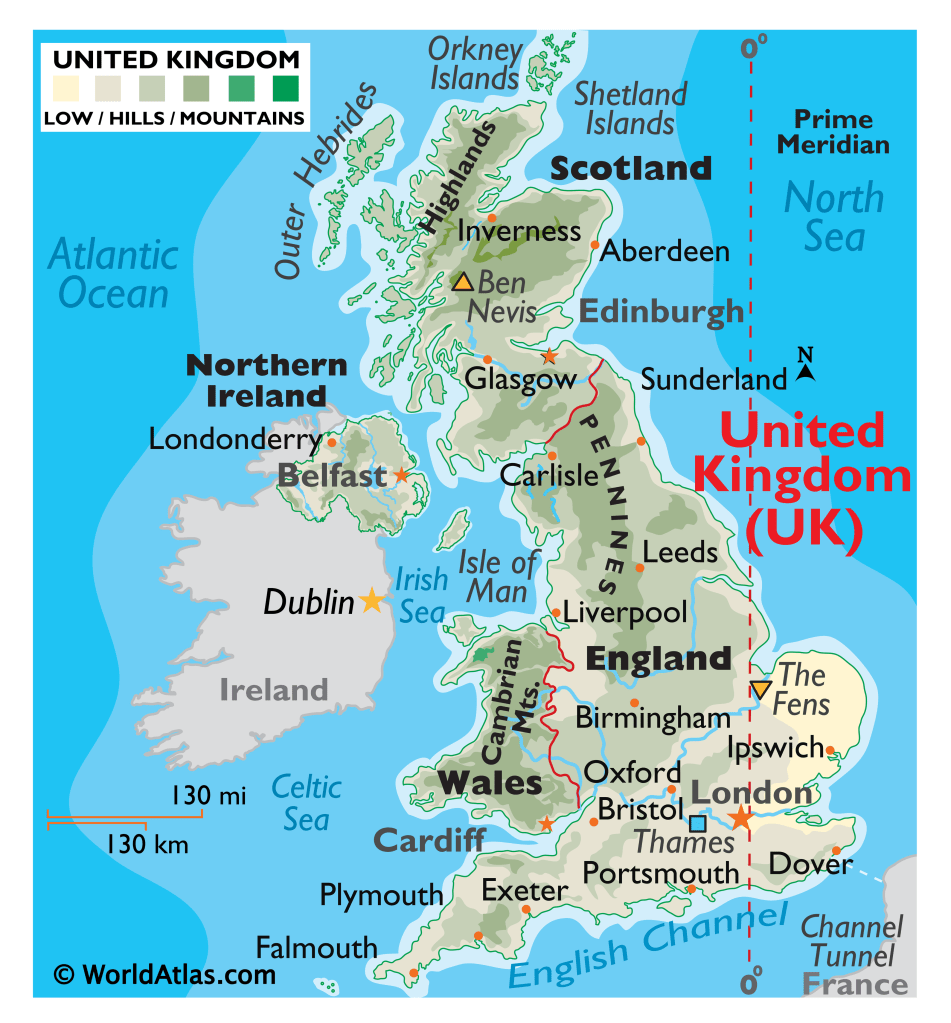
Beyond the spectral figures and the enigmatic Fae, the British Isles are a treasure trove of unique creatures and localized legends that defy easy categorization. These are the cryptids—beings whose existence is unproven but whose stories are deeply embedded in regional folklore—and the specific tales that give certain landscapes their eerie, unforgettable character. From misty moors to ancient forests and hidden lochs, Britain’s diverse topography has given birth to a fascinating array of unique entities.
Dartmoor: A Landscape of Pixies and Peril
The vast and atmospheric landscape of Dartmoor in Devon is particularly fertile ground for such tales, steeped in centuries of folklore encompassing pixies, ghosts, witchcraft, and strange occurrences.3 Its misty moors, dark mires, and craggy granite tors contribute to an air of mystery, making it a living canvas for these narratives.3
Among Dartmoor’s most compelling legends are:
- The Coffin Stone: This stone is said to have been split by a massive thunderbolt from the Almighty, angered by an “evil man” whose coffin was briefly rested upon it during a burial procession to Widecombe Churchyard.3
- Crazywell Pool: Located below Cramber Tor, the dark waters of this pool are rumored to be bottomless. Legend has it that anyone who gazes into the pool on Midsummer’s Eve will see a likeness of the next parishioner to die.3
- Lady Howard of Okehampton Castle: The ghost of Lady Howard is said to haunt Okehampton Castle. At midnight, she reportedly transforms into a black dog and travels from Okehampton to Tavistock, carrying a blade of grass from the castle grounds. Her spirit will only find peace once she has removed every single blade of grass from the castle.3
- The Hairy Hands Bridge: On the B3212 road between Postbridge and Two Bridges, a malevolent haunting is reported. A pair of hairy hands allegedly appear on a driver’s steering wheel or handlebars, attempting to force them off the road. This stretch of road is notorious for fatal accidents.3
- The Hound of the Baskervilles: While fictional, Sir Arthur Conan Doyle was reportedly inspired to write this Sherlock Holmes novel by tales he heard about Dartmoor, including the legend of the evil Squire Cabell, whose death was accompanied by a pack of black hounds howling across the moor.3
Other Dartmoor figures include the evil sprite Cutty Dyer, who lives at King’s Bridge and reportedly accosts drunks, sometimes throwing them into the river or worse.3 The
Grey Wethers Stone Circles are said to be a flock of sheep turned to stone, while Bowerman’s Nose is a hunter transformed into a granite stack by angry witches.3
Scottish Enigmas: From Mountains to Lochs
Scotland, with its rugged landscapes and deep lochs, is home to a host of unique cryptids:
- The Big Grey Man (Am Fear Liath Mòr): Scotland’s answer to the Sasquatch or Yeti, this creature is covered in grey hair and is found on Ben Macdui, the second-highest mountain in Scotland. First reported in 1925 by scientist J. Norman Collie, it has been described as aggressive.2
- Cu Sith (coo shee): A malevolent fairy dog with dark green shaggy fur and a braided tail, found on the west coast of Scotland. It barks three times, with the third bark signaling “Dinner time!”.2
- The Wulver: Unlike common werewolves, the Wulver of Shetland is a benevolent wolf-headed man who was never human. He is not aggressive if left alone and will even leave fish on the windowsills of the poor.8
- Kelpies: These shapeshifting water spirits are commonly seen as beautiful horses, but they lure unsuspecting humans to the water and devour them. They can also transform into human form.8
- Selkies: Gentle creatures from Scottish and Irish folklore, Selkies are seals that can shed their skin to take human form on land. They are very attractive in human form but eventually return to the sea unless their shed skin is hidden.8
- Blue Men of the Minch: These normal-sized blue men inhabit the Minch waterway between mainland Scotland and the Outer Hebrides. They can create storms and challenge vessels with poetry; if the master of the vessel fails to complete the poem, they will capsize the ship.9
- The Sluagh: Malevolent spirits from Scottish and Irish folklore, believed to be the restless souls of the improperly buried or those who committed heinous crimes. They fly through the skies at night, swooping down on unwary travelers to carry them off to the Otherworld.11
- The Each Uisge: Also known as the “water horse,” this creature inhabits lochs and rivers, luring people onto its back before diving into the water and drowning them.8
- The Nuckelavee: A terrifying and grotesque hybrid of a horse and a man from Orkney, covered in seaweed and slime, with poisonous breath. It is associated with disease, drought, and famine.8
- The Loch Ness Monster (Nessie): The most well-known of Scotland’s creatures, this serpent-like cryptid has been reported in Loch Ness since the 6th century, though its existence remains unproven.8
Welsh Wonders: Dragons, Dogs, and Mine Spirits
Wales boasts its own unique pantheon of mythical beings, deeply tied to its dramatic landscapes:
- The Red Dragon (Y Ddraig Goch): The most famous Welsh mythological creature, recognized from the national flag, symbolizing the nation’s fiery spirit.12
- The Afanc: A terrifying beast said to dwell in the deep, dark waters of Welsh lakes, described variously as a crocodile-like or beaver-like monster.12
- The Black Dog of Annwn (Cŵn Annwn): These spectral hounds belong to Annwn, the Otherworld, ruled by the god of the dead. They roam the countryside, especially on stormy nights, serving as an omen of death.13
- The Gwiber: A fearsome serpent or dragon-like creature that could fly and breathe fire, said to dwell near ancient stone circles, rivers, and isolated hills.12
- The Gwyllgi: Sometimes called the “Dog of Darkness,” this monstrous black hound with glowing red eyes stalks lonely roads and remote villages at night. Unlike the Cŵn Annwn, it’s a more physical and sinister presence.13
- Water Horses (Ceffyl Dŵr): These shapeshifting supernatural beings lure unsuspecting travelers to their doom by appearing as beautiful horses.12
- The Mari Lwyd: A unique ghostly horse tradition, part of a winter celebration, represented by a decorated horse’s skull carried on a pole, challenging homes to rhyming songs.12
- Giants: Welsh mythology tells of giants like Bendigeidfran (Bran the Blessed), powerful figures who shaped the land and acted as protectors.13
- The Coblynau: Small, goblin-like creatures inhabiting Welsh mines. They are helpful spirits who warn miners of cave-ins or lead them to ore, but can also be mischievous if disrespected.12
- The Ellyllon: Friendly, ethereal elves who love nature and music, but are easily offended if their homes are disturbed.12
- Pwca: A shapeshifting goblin, always black, capable of appearing as a rabbit, horse, cat, goat, or dog. Encountering one was believed to bring terrible fortune.13
- Old Magw the Witch: A feared figure from Clydach Gorge, known for her vicious punishments of children.13
English Local Legends: Beyond the Familiar
Beyond Dartmoor, England has its own share of unique and often terrifying local legends:
- The Lambton Worm: A monstrous worm-like creature from County Durham that could reassemble itself even when cut into pieces. It was finally defeated by a local lord using a clever strategy involving bladed armor and a river.14
- The Hexham Heads and the Allendale Wolf: These are specific local legends from Northumberland, though details are less widely documented.14
- The White Lady of Cresswell Pele Tower: A well-known local haunting in Northumberland, the spirit of a noblewoman who tragically threw herself from the tower after her beloved prince was murdered by her brothers.14
- Asrai: An aquatic fairy from English folklore, described as pale, gentle beings older than humanity, who fear light and live beneath freshwater lakes.2
- Fad Felen: An unusual Welsh creature, an ugly hag with yellow eyes, hair, and teeth, whose breath meant death. She is linked to the Yellow Plague of 526-547 CE.2
- Herne the Hunter: Originally a ghostly poacher haunting Windsor Forest, he evolved into a figure with antlers who leads the Wild Hunt in British myth, linked to the Celtic god Cernunnos.2
These cryptids and local legends, often tied to specific geographical features or historical events, serve as powerful reminders of Britain’s rich and diverse folkloric heritage. They embody the fears, values, and imaginative spirit of the communities that have passed them down through generations.
Footnotes
1 Haughton, Brian. “The Folklore of Ghosts and Hauntings.”
Brian Haughton.com, n.d. https://brian-haughton.com/ancient-mysteries-articles/folklore-ghosts-hauntings/
2 Parker, Phil. “The A to Z of British and Irish Mythological Creatures.”
PhilParker-FantasyWriter.com, n.d. https://www.philparker-fantasywriter.com/post/the-a-to-z-of-british-and-irish-mythological-creatures
3 Visit Dartmoor. “Myths and Legends.”
VisitDartmoor.co.uk, n.d. https://visitdartmoor.co.uk/myths-and-legends/
4 Parker, Phil. “The A to Z of British and Irish Mythological Creatures.”
PhilParker-FantasyWriter.com, n.d. https://www.philparker-fantasywriter.com/post/the-a-to-z-of-british-and-irish-mythological-creatures
5 Timberbush Tours. “The Creatures of Scottish Folklore.”
Timberbush-Tours.co.uk, n.d. https://www.timberbush-tours.co.uk/news-offers/the-creatures-of-scottish-folklore
6 The Irish Road Trip. “Irish Mythological Creatures and Monsters from Celtic Folklore.”
TheIrishRoadTrip.com, n.d. https://www.theirishroadtrip.com/irish-mythological-creatures/
7 Centre of Excellence. “Mythical Creatures in Welsh Mythology.”
CentreofExcellence.com, n.d. https://www.centreofexcellence.com/mythical-creatures-in-welsh-mythology/
8 Timberbush Tours. “The Creatures of Scottish Folklore.”
Timberbush-Tours.co.uk, n.d. https://www.timberbush-tours.co.uk/news-offers/the-creatures-of-scottish-folklore
9 Blog Scottish Kilt Shop. “Scottish Monsters.”
Blog.ScottishKiltShop.com, n.d. https://blog.scottishkiltshop.com/scottish-monsters/
10 Spooky Isles. “Top 10 Most Disturbing Welsh Folk Legends.”
Spooky Isles, n.d. https://www.spookyisles.com/creepiest-welsh-ghosts-monsters/
Reddit. “Local folklore and spooky tales.” Reddit, March 20, 2024.(https://www.reddit.com/r/NewcastleUponTyne/comments/1bnigll/local_folklore_and_spooky_tales/)
Blog Scottish Kilt Shop. “Scottish Monsters.” Blog.ScottishKiltShop.com, n.d. https://blog.scottishkiltshop.com/scottish-monsters/
Parker, Phil. “The A to Z of British and Irish Mythological Creatures.” PhilParker-FantasyWriter.com, n.d. https://www.philparker-fantasywriter.com/post/the-a-to-z-of-british-and-irish-mythological-creatures


 Paranormal POV
Leave a comment