
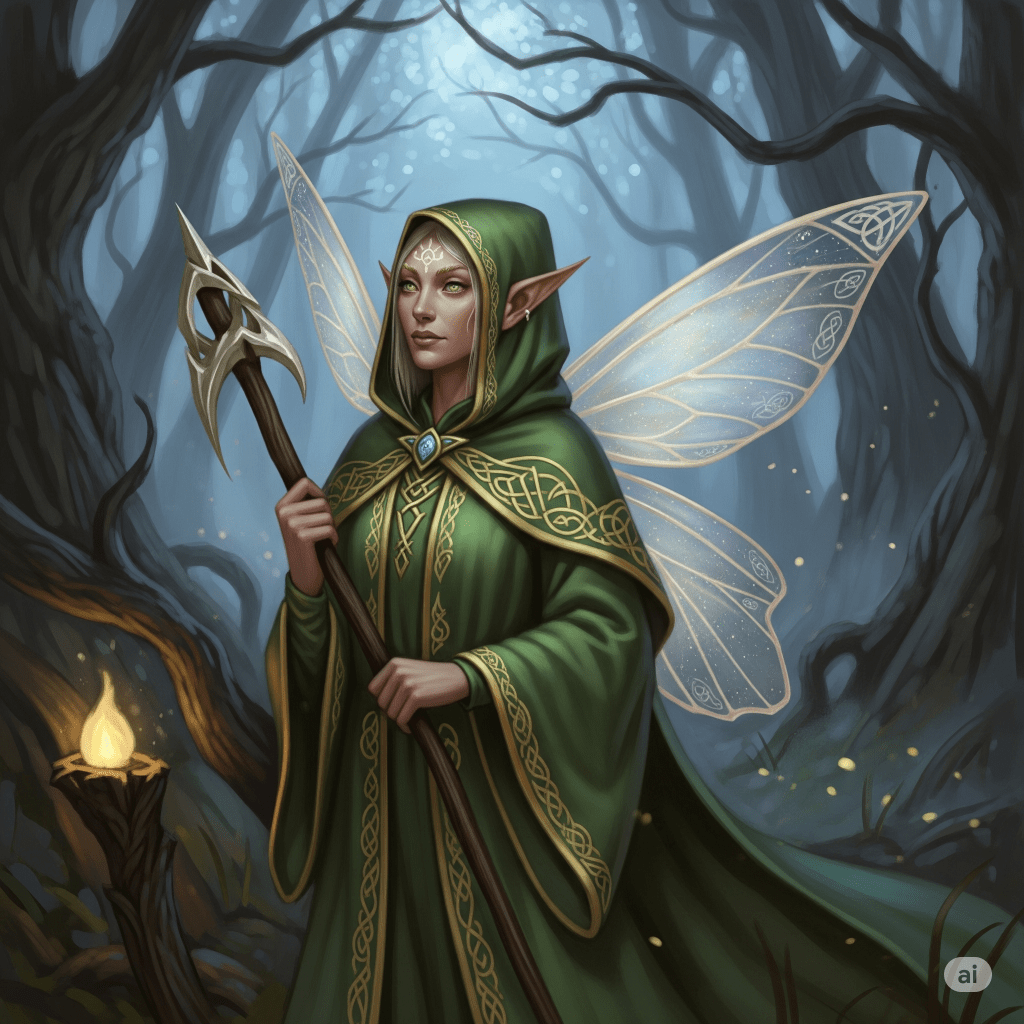
Imagine a cold, rainy night in a small cottage in Ireland or Scotland, centuries ago. The fire crackles, casting dancing shadows on the walls, and the wind howls outside. It’s the perfect setting for a grandmother to lean in close, her voice hushed, and share tales of the Fae—not the sparkly, winged sprites of modern stories, but the powerful, often unpredictable beings that truly populated the ancient British Isles. These were stories meant to entertain, yes, but also to warn, to instill a healthy respect for the unseen world.
The Changelings: A Mother’s Worst Fear
One of the most chilling tales grandmothers would tell involved the Changelings. It was said that the Fae, with their strange desires, would sometimes steal a human baby from its crib, leaving one of their own in its place.1 This changeling might be a sickly, wizened fairy child, or even an ancient, tired fairy seeking comfort in a human home.1
The signs were subtle at first: a baby that wouldn’t grow, had an insatiable hunger, or whose eyes held a strange, dark knowing beyond its years.2 Sometimes, when the changeling thought it was alone, it might reveal its true nature—jumping about, dancing, or even playing a beautiful, unearthly tune on an instrument it shouldn’t know how to play.1 To protect a child, a mother might place open iron scissors near the crib or drape the father’s garment over the baby, for the Fae feared iron and human love.2 And if suspicions grew, a clever mother might try to trick the changeling into speaking, for a true human baby would not speak so soon.2
The Bean Nighe: Washerwoman of Death
From the misty streams of Scotland came the tale of the Bean Nighe, or “Washerwoman”.3 She was a type of Banshee, a wailing female spirit whose cry foretold death.4 The Bean Nighe could be seen at the edge of isolated streams, endlessly washing the bloody clothes of those who were about to die.3 She often appeared as a hag, but could transform into a beautiful woman to lure the unwary.6 If you were brave enough to approach her, she might tell you the names of those soon to perish, but woe betide anyone who interrupted her grim task without proper respect.6
The Kelpie’s Deceptive Beauty
Beware the waters, children, for in the lochs and rivers lurked the Kelpie.3 This mythical water horse was a creature of deceptive beauty, often appearing as a magnificent horse with a seaweed-tangled mane.3 It would lure unsuspecting travelers, especially children, to mount its back. But once you were on, you were trapped. The Kelpie would then plunge into the depths, dragging its victim to a watery grave.3 Sometimes, it could even shed its horse skin and appear as a beautiful human, seeking a partner, only to return to the water if its hidden skin was found.3
The Dangers of the Fairy Ring
And never, ever step into a fairy ring! These circles of mushrooms in fields or forests were not just ordinary fungi. They marked the places where the Fae gathered to dance under the moonlight, their revels hidden from mortal eyes by a powerful glamour.7 To step inside was to risk being drawn into their world, where time moved differently, and a single night could feel like years, or years like a single night.7 Misfortune, or worse, could befall those who trespassed on their sacred dance floors.7
These stories, passed down through generations, served as a vital part of childhood education, teaching caution, respect for nature, and the enduring power of the unseen world that lay just beyond the flickering firelight.


 Paranormal POV
Leave a comment