
As mysterious archaeological sites go, none are quite as haunting as the Lost Colony of Roanoke, a peculiar puzzle both bone-chilling and fascinating.
In the late 16th century, spanning the years 1584 -1590, England endeavored to establish its first permanent settlement in the New World. This attempt, which forever became known as the Lost Colony of Roanoke, stands as one of history’s biggest unsolved mysteries.
Origins and Departure from Europe
Roanoke’s story begins in 1584 when Queen Elizabeth I granted Sir Walter Raleigh a charter for the colonization of the area that we now know as North Carolina. Raleigh, passionate about facilitating England’s foothold in the New World, saw this as an opportunity to challenge Spanish dominance while extracting resources for the gain of the English crown.
However, Raleigh himself never actually set foot in North America. In his stead, he dispatched a series of expeditions to explore, and eventually colonize, the designated area. The first mission aimed to map and explore the geography, whilst establishing alliances with native local tribes.
The second one, in 1585, saw an attempt to establish a settlement on Roanoke Island, only to be foiled by harsh environmental conditions and conflicts with native tribes.
After these initial hurdles, 1587 saw another effort to colonize the New World. This third expedition, led by Governor John White, intended to establish a permanent settlement called the City of Raleigh. Abandoning the plan last-minute, 150 settlers including women and children headed to Roanoke Island instead, setting the stage for what would become an eternal enigma.
Last known facts and Departure
In August 1587, shortly after the arrival of the settlers, White’s daughter Eleanor Dare gave birth to a daughter, Virginia, who has been recognized as the first English child born in the Americas. Soon after, Governor White was forced to return to England to gather much-needed supplies. His departure was extemporaneous, due to impending hardships, including food shortages and growing tensions with neighboring Native American tribes.
White planned to return promptly, but his plans were considerably delayed by the outbreak of the Anglo-Spanish War. The conflict engrossed all available ships, necessitating their usage in the war effort. This deferred White’s return to Roanoke until 1590.
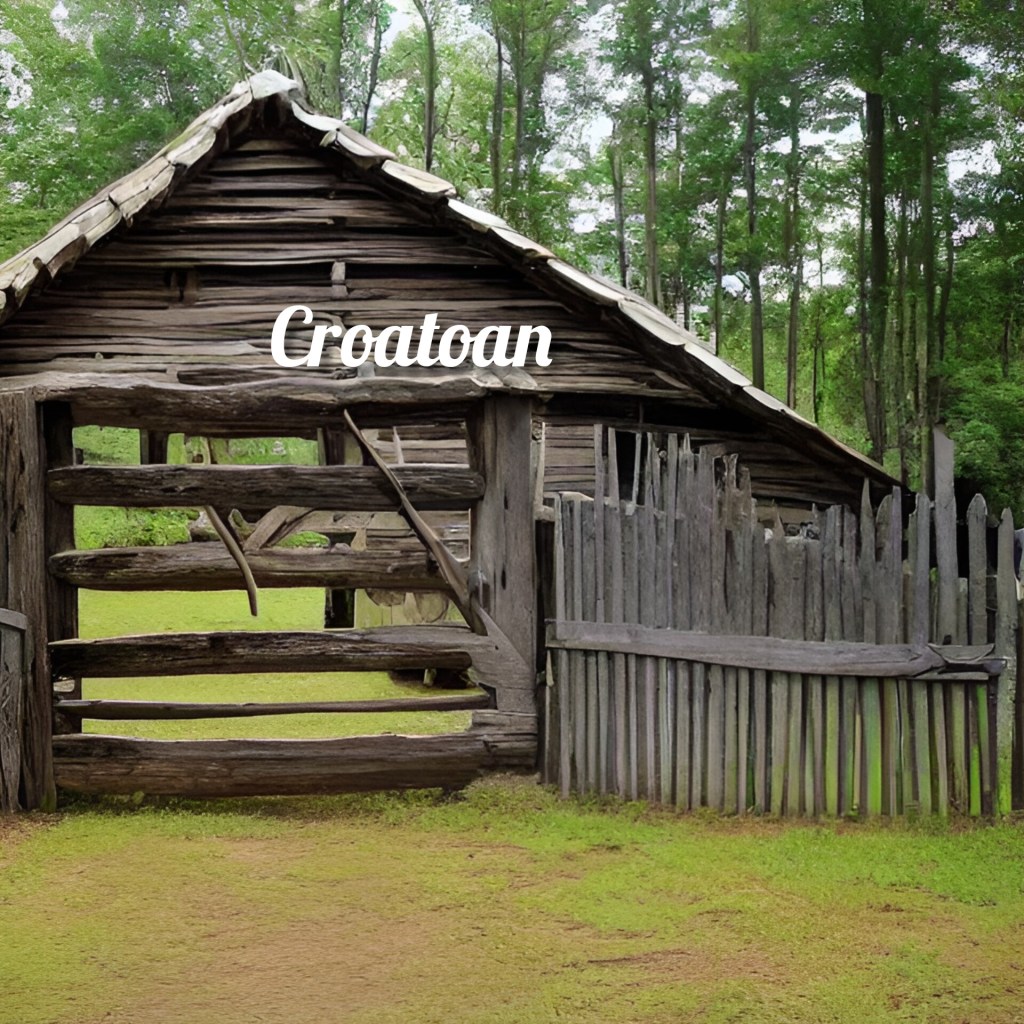
Upon his return, White found the entire settlement deserted without a trace of violence or struggle, and with no remains. He found the cryptic word “Croatoan” carved into a fort’s gatepost and “Cro” scraped into a tree. All the houses and fortifications were dismantled, which suggested it wasn’t a hurried departure.
Theories of Disappearance
The eerie disappearance of 117 men, women, and children mystified historians for centuries and spurred countless theories. The colonists might have integrated with friendly local tribes, as suggested by the word “Croatoan,” the name of an allied native tribe living on an island later known as Hatteras. Other theories proposed they fell victim to diseases, or to a massacre at the hands of neighboring tribes.
In recent years, archaeological research has sparked new theories based on discovered native American artifacts of European origin. Some scholars suggest that the colonists fragmented into various groups and assimilated with multiple indigenous tribes, which might explain the European items found in various locations across North Carolina.
Regardless of the myriad theories proposed, the fate of Roanoke’s colony remains one of history’s most haunting mysteries. It’s a story interwoven with the very cloth of America, a haunting reminder of the struggles, hopes, and enigmas that befell those who sought to make the New World their home.
Even as uncertainty lingers, researchers strive to unravel this mystery, and perhaps, someday, we will finally uncover the truth behind the centuries-old enigma that is the Lost Colony of Roanoke.


 Paranormal POV
Leave a comment